Marysville
The Outsider (Stephen King Edition)Marysville is a small Texas town tied to two sharply different forms of vulnerability: the everyday hardship of Claude Bolton and his aging mother, Lovie, and the lasting communal wound left by the closure of the Marysville Hole. Claude’s home gives the investigators a human point of contact in the region; the Hole, once the town’s principal employer, draws them toward the dangerous place where the outsider is hiding.
Setting and the Bolton Home
Marysville is described to Ralph Anderson as little more than a wide spot in the road. Claude is from the town, and while working elsewhere he sends part of each paycheck to his mother there. His address is Box 397, Rural Star Route 2, a detail that places the family outside the town’s center and makes their home a destination reached along rural roads. Claude has gone back to help Lovie consider assisted living, though neither his modest income nor her reluctance makes that an easy prospect.
Lovie’s circumstances give this remote address particular weight. When a Texas Highway Patrol car turns into the driveway, she is sitting on the porch with a cigarette and an oxygen tank beside her rocking chair. Claude, meanwhile, is in the weedy backyard taking in and folding the washing. The dryer has failed, and Lovie is too short of breath to hang clothes herself; Claude intends to buy a replacement but has kept putting it off. The small domestic task, interrupted by the arrival of a patrol officer, introduces Marysville not as an abstract point on a map but as a place where care is practical, physical work performed under financial limits.
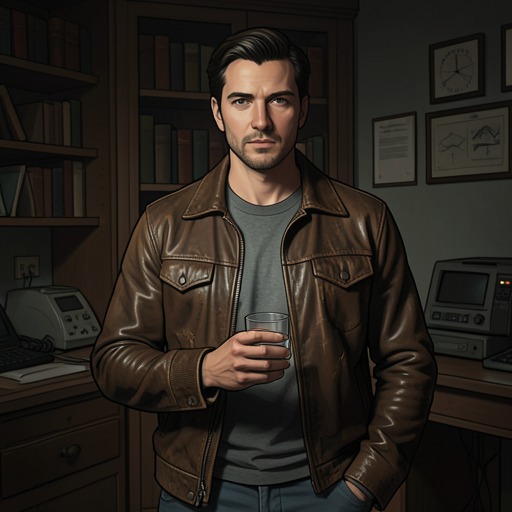
Lovie describes Claude as a devoted son: he sends her money every other week, visits when he can, and would like to move her to a care home in Austin if he could afford it. Her account also carries a history of change: he was a hellraiser when young, she says, but became trustworthy later. He cooks while staying with her, partly because she distrusts roadside cafés after a bout of food poisoning years earlier. Her dry confidence and affectionate teasing sit beside the oxygen equipment and the failed dryer, making the household’s resilience inseparable from its needs.
The Investigation Reaches Marysville
Ralph learns that Claude has gone to Texas to see about care for his mother. To check Claude’s account of his movements, Ralph asks Horace Zellman to send a state trooper to the Bolton home under a cover story. The visit supplies an independent detail: Lovie says Claude cooked breakfast that morning. Ralph uses this information to compare her account with the sighting of Claude elsewhere, turning an ordinary act of filial care into a test of the investigation’s chronology.
Marysville becomes more than a place to verify an alibi when Claude contacts Ralph again. He agrees to meet the group at Plainville airport, roughly sixty miles from his home, because he is frightened and wants to know what is happening. He says that he barely slept, repeatedly got up during the night, and felt watched. The sensation recalls his time in prison, when a bad event seemed imminent even though nobody knew exactly what it would be. His mother, too, had begun to feel uneasy. Ralph does not yet explain the whole situation over the phone; the unease is carried forward to the meeting.
The town’s surrounding roads also enter the narrative as a route into its history. Rural Star Route 2 eventually reaches Highway 190 out of Austin. Before the highway, a broad dirt road branches toward the Hole, marked by a decaying billboard. That route gives the approaching investigation a distinct threshold: the family’s lived-in home and ordinary errands lead toward a tourist attraction whose welcome has become a warning.
The Marysville Hole and the Town’s Loss
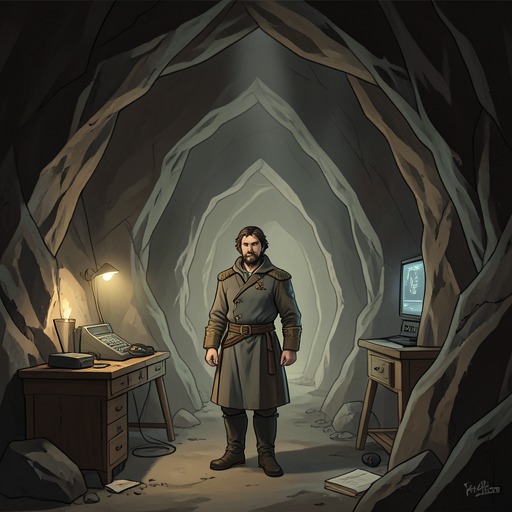
The old billboard advertises the Marysville Hole as one of nature’s greatest wonders. Its painted family descends a spiral staircase with gas lanterns raised toward stalactites, but time has stripped away much of the sign’s message. The visible fragments of its invitation, together with a faded notice that the attraction is closed, preserve the contrast between the promise of spectacle and the site’s present abandonment. Claude remembers the road from his restless teenage years in Marysville; locals called it the Road to the Hole, a name that now carries the knowledge of what happened there.
Holly Gibney explains the scale of the loss to the investigation team. Boys disappeared in the Hole, and the rescue party sent after them also suffered a terrible disaster. The consequences reached beyond the bereaved families: the Hole had been Marysville’s only job provider, and many residents left after it closed. The town’s decline is therefore bound to the cave’s history. Closure is not simply the end of a tourist attraction; it removes the economic center on which local life depended.
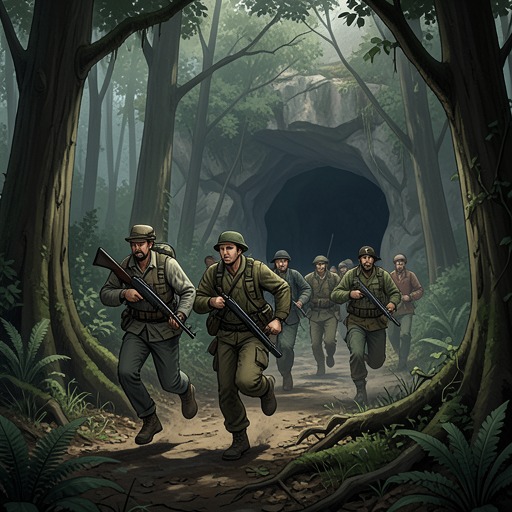
By the time the investigators return to the attraction, the setting is materially deteriorated as well as socially diminished. They pass the billboard, drive slowly over cracked asphalt, and approach a knoll where Holly identifies the main cave entrance, long since plugged. The temperature has risen from the mid-fifties when they set out toward the seventies as they reach the site. A former ticket booth and a chain across the road mark the boundary between the old visitor route and the closed, desolate ground beyond it. Holly proposes checking the blocked entrance for signs of entry, linking the physical remnants of the attraction to the immediate search.
A Domestic Warning and a Supernatural Threat
Before the trip to the Hole, Claude’s fear of being watched has subsided during a drive away from the Bolton home. Passing the decaying billboard, he feels briefly lightheaded, then raises the air conditioning, turns on the radio, and sings along to country music. He even thinks about bringing home a chicken dinner and eating onion rings while they are hot. The scene places an unremarkable desire for food and a moment of relief against the road’s ominous destination: the threat has not disappeared, but the familiar routines of a drive home temporarily reassert themselves.
After the encounter at the cave, Marysville’s unease is understood as part of the outsider’s attack rather than as an isolated household apprehension. Lovie has old Percocets for back pain; Yune Sablo takes two instead of Motrin, and Claude, who learned first aid during his last prison term, bandages his wound while Holly explains the situation to the Boltons. She speaks quickly because the Highway Patrol will soon arrive to ask questions, and the family needs to understand what has happened before official scrutiny begins. There is no disbelief from them: Lovie and Claude had felt the outsider’s presence two nights earlier, while Claude’s sense of disquiet and of being watched had begun even earlier.
Holly interprets that sensation as the outsider plundering Claude’s mind. Claude, in turn, tells her that she saw the creature hiding in the cave. The exchange ties the family’s earlier fear to the investigators’ confrontation with the threat, while returning the narrative to Marysville’s central geography: the road, the shut-down attraction, and the cave itself. The town is both the Boltons’ home and the place where a private, bodily sense of being watched becomes part of the investigation’s evidence about the outsider.